02 · Apple Intelligence
A reviewed idea, chosen for someone real.
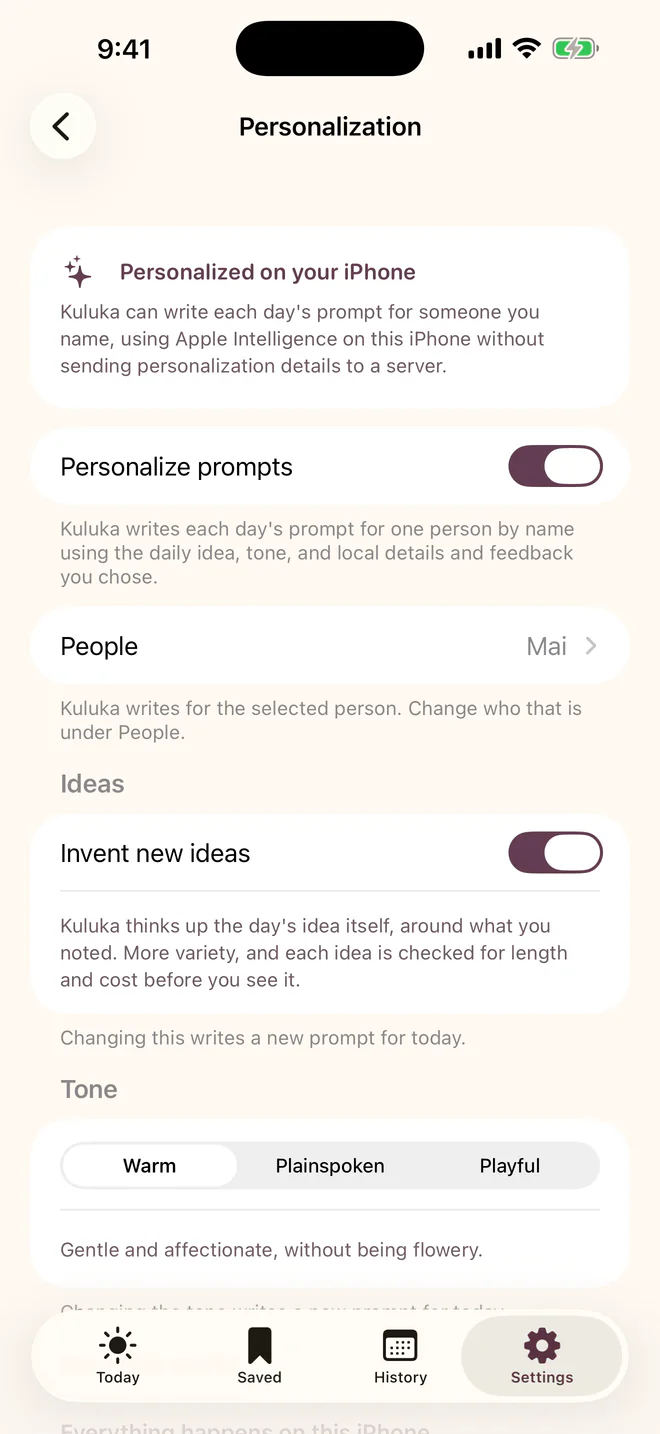
On iOS 26 devices that can use Apple Intelligence now or after a recoverable availability change, Kuluka introduces personalization during onboarding so its private on-device benefit is clear from the start. You choose whether to set it up, skip it, or turn it off later. Earlier iOS versions and ineligible hardware skip that setup page.
What Kuluka sends to the on-device model
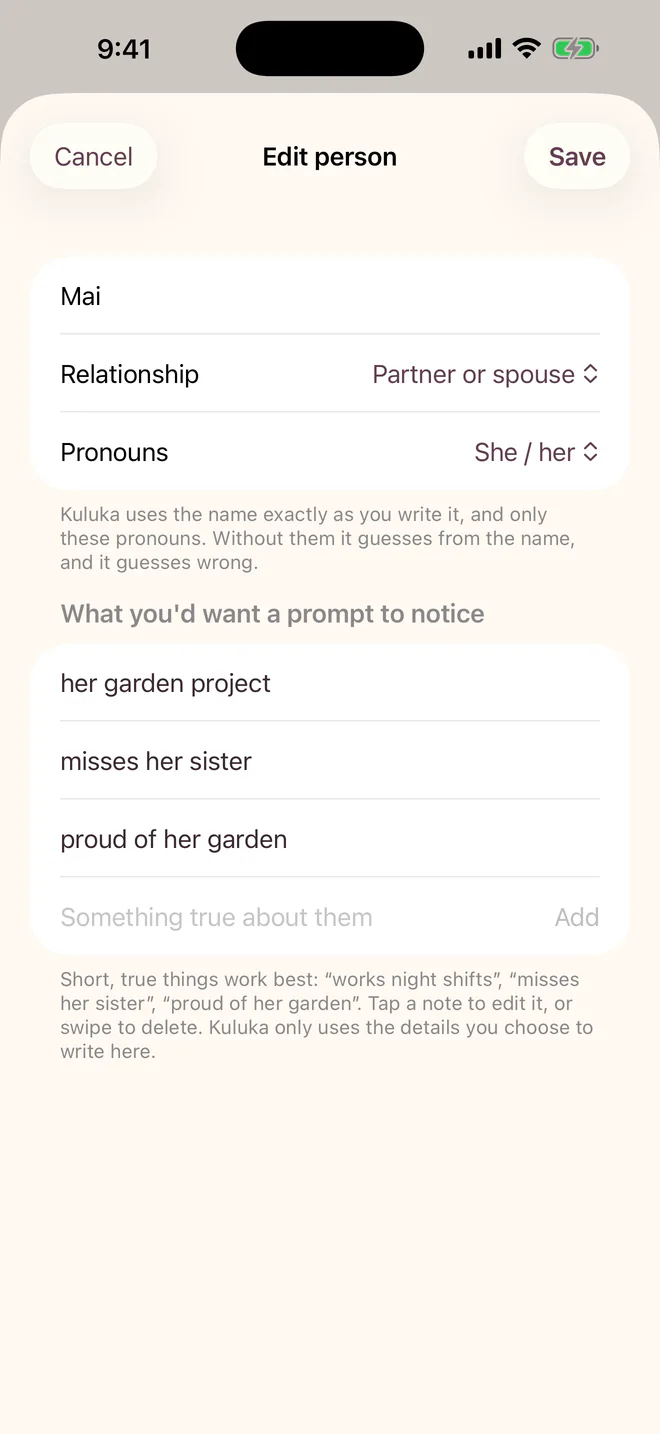
Filtered notes about the selected person, their relationship, your chosen tone, and the text for a bounded set of human-reviewed choices. Kuluka does not serialize the separately stored name or pronoun fields, linked Contacts fields, completion notes, or separately stored records for every other person. It removes stored-name tokens from notes and excludes notes that look like email addresses, web links, or phone-like numbers. Ordinary free-form notes can still contain pronoun words, postal addresses, references to other people, or other personal text. Sensitivity and relationship compatibility are checked locally first.
What Apple Intelligence returns
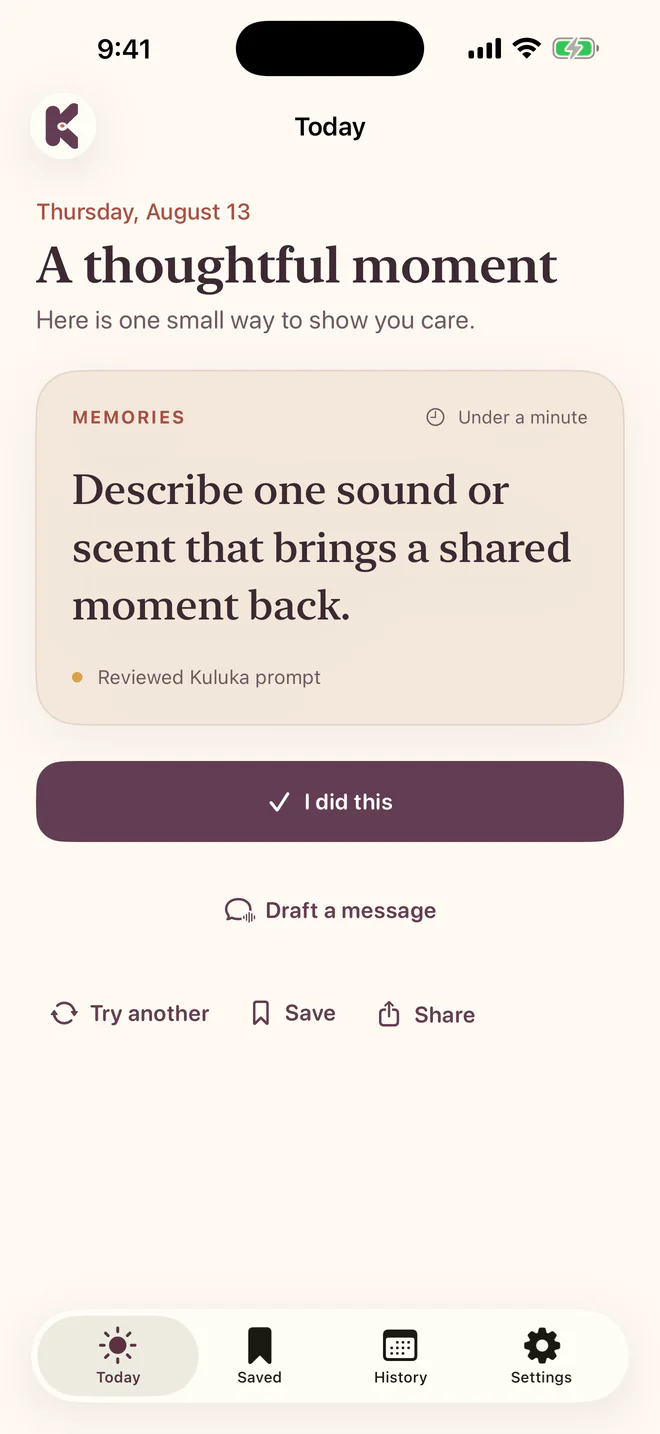
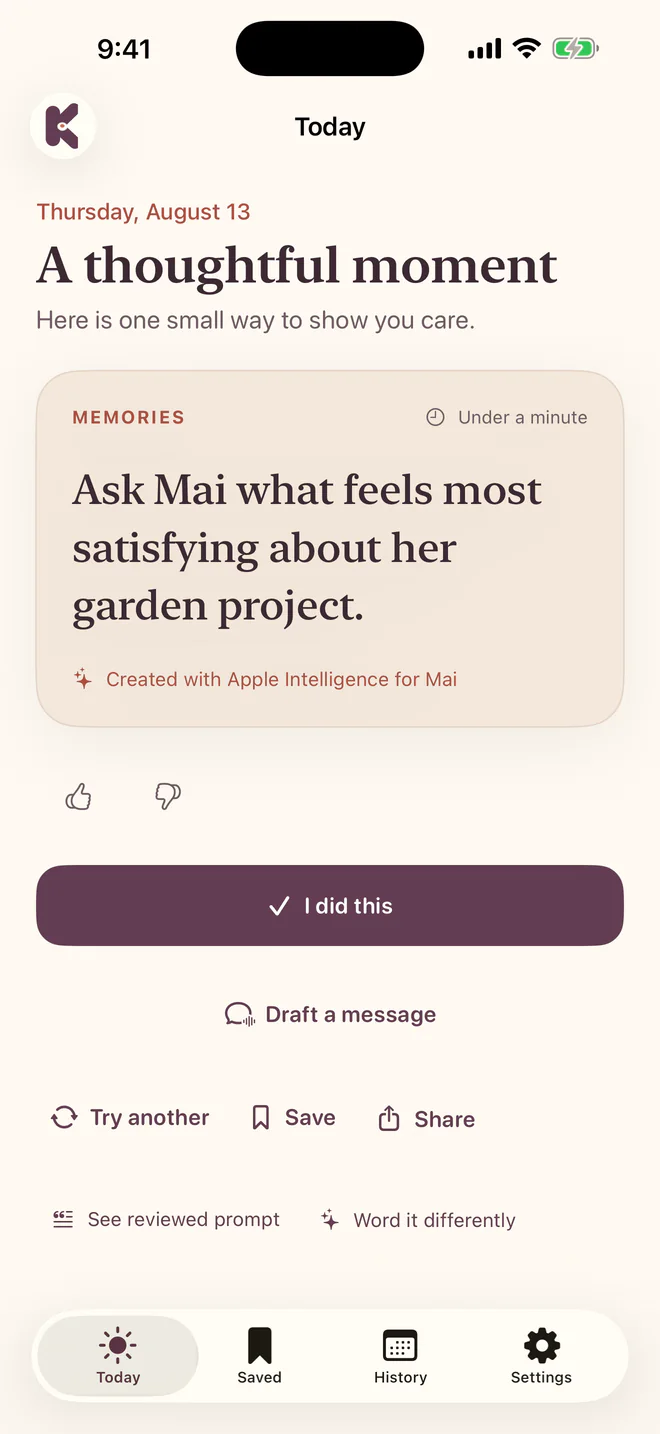
Only an opaque token created for that request. Kuluka resolves the token to reviewed prompt text, then applies the selected person’s name or pronouns deterministically on the iPhone. The model never writes the daily prompt shown on screen, so there is no generated-wording critic or safety-rejection loop. If AI cannot choose, a reviewed fallback stays ready; when Apple Intelligence is available, Kuluka may safely apply the stored name locally.
What the feature requires
iOS 26 or later, a supported Apple Intelligence-capable iPhone, Apple Intelligence turned on, and a ready supported language. On iOS 18 and other unsupported devices, the same people, contact-linking, drafting, review, and sharing flows use reviewed fallback wording.